
SovereignPerformance is a research project focused on the political repertoires of democratic movements that strive for independence or autonomy. We study these by looking at the performative and aesthetic dimensions of politics.
CENTRAL IDEAS OF THE PROJECT

The project is hosted by the Conflict Research Group at Ghent University and funded by a Consolidator Grant from the European Research Council. It is executed by a team of five post-doctoral researchers and a team leader (Bart Klem).
NEWS
Collaboration with academics from Rojava University
SovereignPerformance has initiated a collaborative research effort with selected academics from Rojava University. This initiative is facilitated by dr. Yasin Sunca. A kick-off seminar was held on 30 October, in which Demet Arpacik and Bart Klem discussed the project’s conceptual framework and the ways in which this could be applied in the Kurdish context.
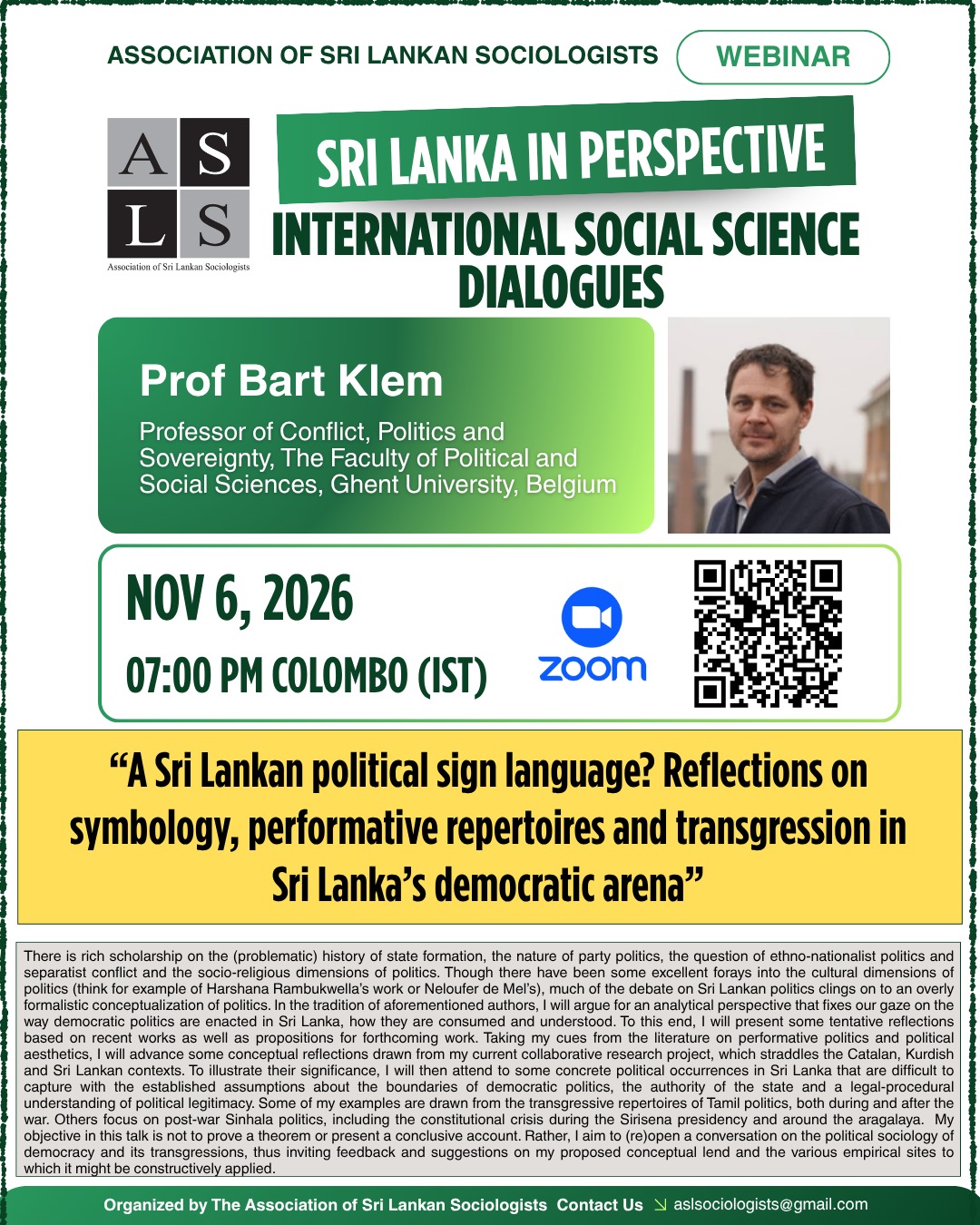
ASLS Webinar: Sri Lanka in perspective
SovereignPerformance’s Bart Klem will participate the webinar series Sri Lanka in perspective, organised by the Association of Sri Lanka Sociologists. Titled “A Sri Lankan political sign language? Reflections on symbology, performative repertoires and transgression in Sri Lanka’s democratic arena”, his intervention will advance conceptual reflections emerging from the initial phases of the project and substantiate them with key events in Sri Lanka’s political history. The webinar is scheduled for 6 November 2026, at 19:00 (Colombo time, IST). You can join the webinar at the following link.
Call for papers: “New scripts, new stages? Rearticulating Sri Lankan Tamil nationalism”
We are looking for fellow academics who want to contribute to a special issue with the working title: “New scripts, new stages? Rearticulating Sri Lankan Tamil nationalism”. This special issue will be co-edited by Bart Klem, Sidharthan Maunaguru and Geetha Sukumaran. This initiative is supported by the SovereignPerformance project, and there will be scope to bring people together to workshop papers. For more information, please refer to the call for papers.
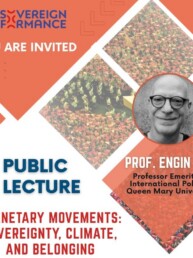
SovereignPerformance Public Lecture with Engin Isin
On 27 October, the SovereignPerformance project organises a public lecture with Prof. Engin Isin, who will examine the planetary challenges and investigate emerging promising and effective collective organising methods. On one hand, this lecture discusses a planetary condition characterised by climate change, genocidal wars, orbital and superscale data processing centres, interplanetary communication networks, and the inadequate or ineffective responses of national and international organisations. On the other, it analyses how numerous social movements have broadened their scope and organisation to address these challenges and are developing new political practices termed ‘planetary movements’. These developments are reshaping our understandings of sovereignty and citizenship. You can find more information and register at the following link.
Special Issue presentation: Opposition learning in the Middle East and North Africa
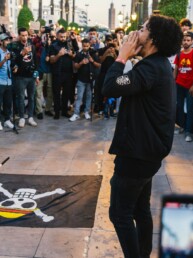
Together with the UGent’s Conflict Research Group, the SovereignPerformance project will co-organize a presentation of the Special issue “Opposition learning in the Middle East and North Africa” (co-edited by Alfonso Casani and Francesco Colin) on 9 November 2026. This project was born out of a simple realisation: if authoritarian regimes learn, why can’t opposition actors learn, too? Alfonso Casani and Francesco Colin will be joined by André Bank and Anne Kirstine Rønn to present the theoretical framework developed in the special issue, some of its empirical contributions, and discuss the possible implications for scholarship. You can find more information and register at the following link.
New publication in the Review of International Studies
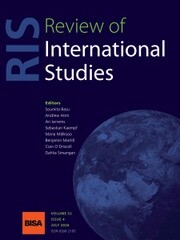
“The institutional lives of peace. A historical-institutionalist perspective on the (unintended) political legacies of peacebuilding” (authored by Richard Georgi, Bart Klem, Nasia Hadjigeorgiou and Carolina Valente Cardoso) appeared in the Review of International Studies. It asks the simple question why peacebuilding institutions tend endure, often for decades, even though they almost invariably fail to meet their objectives. They have a significant, often lasting impact, but one that is different from what was intended. Peace institutions become absorbed in the political landscape, and they develop their own institutional dynamics. In this article, we review four different institutions in four very different contexts: Cyprus, Colombia, Angola and Sri Lanka. We draw on Historical Institutionalism to develop an analytical toolkit that offers us traction on these four fascinating institutional trajectories.