
Publications
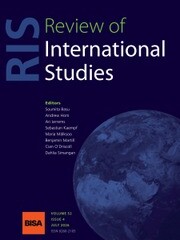
The institutional lives of peace
“The institutional lives of peace. A historical-institutionalist perspective on the (unintended) political legacies of peacebuilding” (authored by Richard Georgi, Bart Klem, Nasia Hadjigeorgiou and Carolina Valente Cardoso) appeared in the Review of International Studies. It asks the simple question why peacebuilding institutions tend endure, often for decades, even though they almost invariably fail to meet their objectives. They have a significant, often lasting impact, but one that is different from what was intended. Peace institutions become absorbed in the political landscape, and they develop their own institutional dynamics. In this article, we review four different institutions in four very different contexts: Cyprus, Colombia, Angola and Sri Lanka. We draw on Historical Institutionalism to develop an analytical toolkit that offers us traction on these four fascinating institutional trajectories.

Trespassing Civic Spaces
How can we restore focus on the political relevance of civic engagement? The Policy Brief “Trespassing ‘Civic’ Spaces: Insights from the Political Resonance of Citizenship Performances in Local Morocco” (authored by Francesco Colin) argues that examining how citizens perform rights claims helps us understand the political struggles behind state-society relations. It articulates key recommendations to policymakers and development professionals to take the politics of local performance seriously.

Bootstrapping sovereignty through placeholder exceptions
“Bootstrapping sovereignty: the placeholder dynamics of contested states from identity documents to international courts” (authored by Janis Grzybowski and Bart Klem) appeared in the European Journal of International Relations. It complements existing research on sovereign aspiring entities by focusing on actors other than governments and international organizations, including ordinary people, field offices of UN agencies, and international courts, that come to indirectly validate assumptions of sovereignty. Speaking to the core of the SovereignPerformance project, this article argues that claims to state sovereignty have performative effects when picked up in circulating attributions, including unwitting ones. Through examples from Northern Cyprus and Palestine to the Tamil Tigers and Syrian opposition governments, this article shows that sovereignty can be bootstrapped as a self-validating status assumption through functional work-arounds and interim arrangements. However, bootstrapping can also falter when validations are suspended.

Citizenship, waiting and fake fakeness
“Legalizing Oneself”: Citizenship, Waiting, and Fake Fakeness in Northern Cyprus (authored by Bart Klem) appeared in Political and Legal Anthropology Review (PoLAR). It reflects on citizenship constellations in the Turkish Republic of Northern Cyprus (TRNC). The article presents four life histories to map out how the unrecognised status of the TRNC affects different kinds of citizens differently. Conceptually, it combines three theoretical strands: the idea of “citizenship as claim”, reflections on the subjectivity of waiting, and the notion of faking fakeness. This article draws on research predating the SovereignPerformance project and focuses on Cyprus (rather than the project case studies). However, it speaks to the conceptual framework of the project and SovereignPerformance facilitated the writing of this piece.

Contested citizenship in liminal spaces
“Contested citizenship in the liminal spaces of a divided Cyprus” (authored by Nasia Hadjigeorgiou and Bart Klem) was published in Citizenship Studies. It combines the critical citizenship literature with political geography. It studies three supposedly “out of place” communities on the divided island Cyprus, to conceptualize the interplay between law, political conflict dynamics, and people’s everyday practices. This article draws on research predating the SovereignPerformance project and focuses on Cyprus (rather than the project case studies). However, it speaks to the conceptual framework of the project and SovereignPerformance facilitated the writing of this piece.
Project syllabus
Alongside listing our own output above, this page maps the broader canvas of ideas on which this project is based. Below, we provide a selection of publications that we find inspirational (clearly there are many others!). This includes some of our own earlier work. As the project progresses, we will continue to add our publications here as well.

Political anthropology
Anthropologists have a long tradition of studying politics through its vernacular understandings and everyday dynamics. Rather than taking the formal institutional architecture of democratic politics as their central vantage point, they explore the meaning that political processes may assume and the ritualistic and symbolic dimensions they may have.

Critical interventions in International Law
Most states have outlawed separatism, and yet the origin of the state itself has a problematic relationship with the law. Many critical law scholars have reflected on this conundrum by rethinking the foundations and boundaries of law.

Radical Geography and critical International Relations
Both IR scholars and geographers have interrogated the power invested in the way states are projected and understood. Feminist and de-colonial perpectives have unsettled the self-evident nature of established states to facilitate alternative ways of conceptualising politics and state conduct.

De facto states and rebel governance
Alongside these disciplinary orientations, our project builds on the existing scholarship on rebel governance (the governing practices or insurgent movements) and de facto states (self-declared sovereign states with limited or no international recognition).

Specifically on performative aspects of sovereign aspirants
Finally, there is some work – scattered across disciplines and diverse case contexts – that adopts an approach of studying separatist politics (and cognate phenomena) with a performative lens. This is the scholarship that we draw on most closely in this project.